At a glance
Quality, environment, health and safety at work and sectoral requirements: Vigilus explains how ISO 9001, 14001, 45001 and 29001 fit into an integrated system.
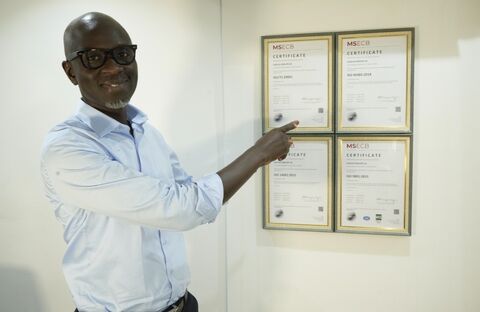
Vigilus relies on four complementary standards — ISO 9001, ISO 14001, ISO 45001 and ISO 29001 — to structure its management system. Their interest does not lie in the accumulation of certificates, but in the ability to link quality of service, environmental control, health and safety at work and sectoral requirements.
ISO 9001: starting from the need and measuring the quality of service
ISO 9001 organizes the understanding of expectations, the control of processes and continuous improvement. For Vigilus, this logic runs through the complete cycle of a service: qualification of the request, evaluation of the site, preparation of the system, mobilization of resources, controls, reporting and processing of deviations.
Indicators should not only count activities. They must help decide: conformity of starting positions, implementation of preventive measures, processing time, recurrence of incidents, satisfaction and closure of corrective actions.
ISO 14001: mastering environmental aspects
ISO 14001 helps identify activities likely to have an impact on the environment and define control measures. Resource consumption, waste, products used, travel and emergency situations are among the topics to be examined depending on the profession.
The approach combines applicable obligations, measurable objectives, team awareness and preparation for environmental incidents. It must remain proportionate to the real impacts, on its own sites as well as in the services provided for customers.
ISO 45001: preventing health and safety violations
Agents, technicians, drivers, cleaning staff and supervisors are exposed to different risks. ISO 45001 structures hazard identification, risk assessment, worker consultation, competence and incident monitoring.
The hierarchy of prevention remains fundamental: eliminate the danger when possible, put in place collective protection, organize the work then supplement with individual equipment. Field feedback and near misses allow you to act before an injury occurs.
ISO 29001: strengthening control for oil and gas activities
ISO 29001 complements the principles of quality with expectations adapted to the supply chain of the oil, gas and petrochemical sectors. It particularly emphasizes the prevention of defects, traceability, control of suppliers and the reliability of processes.
A single system rather than four isolated approaches
Repositories share a common structure. Vigilus can thus bring together context, risks, skills, documents, audits, reviews and improvement in an integrated system. The same action can meet several objectives: better planned maintenance improves quality, reduces professional risks and limits loss of resources.
What integration changes on a daily basis
- Clearly identified responsibilities and processes.
- A coordinated analysis of quality, HSE and operational risks.
- Harmonized evidence accessible to those responsible.
- Audits that look at interactions rather than silos.
- Unique monitoring of actions until their effectiveness is verified.
This institutional news presents the role of the four standards in the management of Vigilus. The exact scope of certifications remains defined by the certificates in force and their scope of application; sales teams can provide relevant supporting documents as part of a consultation.
Maintain the consistency of the integrated system
The risk of a system covering several repositories is to multiply forms and audits. The integrated approach, on the contrary, seeks a single way of managing skills, documents, actions and reviews, supplemented by the requirements specific to each area.
The pilots examine the interactions: a purchasing decision influences quality, environment and safety; a tour organization can affect customer service and agent exposure; a technical breakdown can generate consumption, professional risk and interruption.
Questions asked in management review
- Have the risks and expectations of interested parties evolved?
- Are the objectives producing the expected results?
- Do the incidents reveal a problem common to several processes?
- Do resources and skills remain suitable for development?