
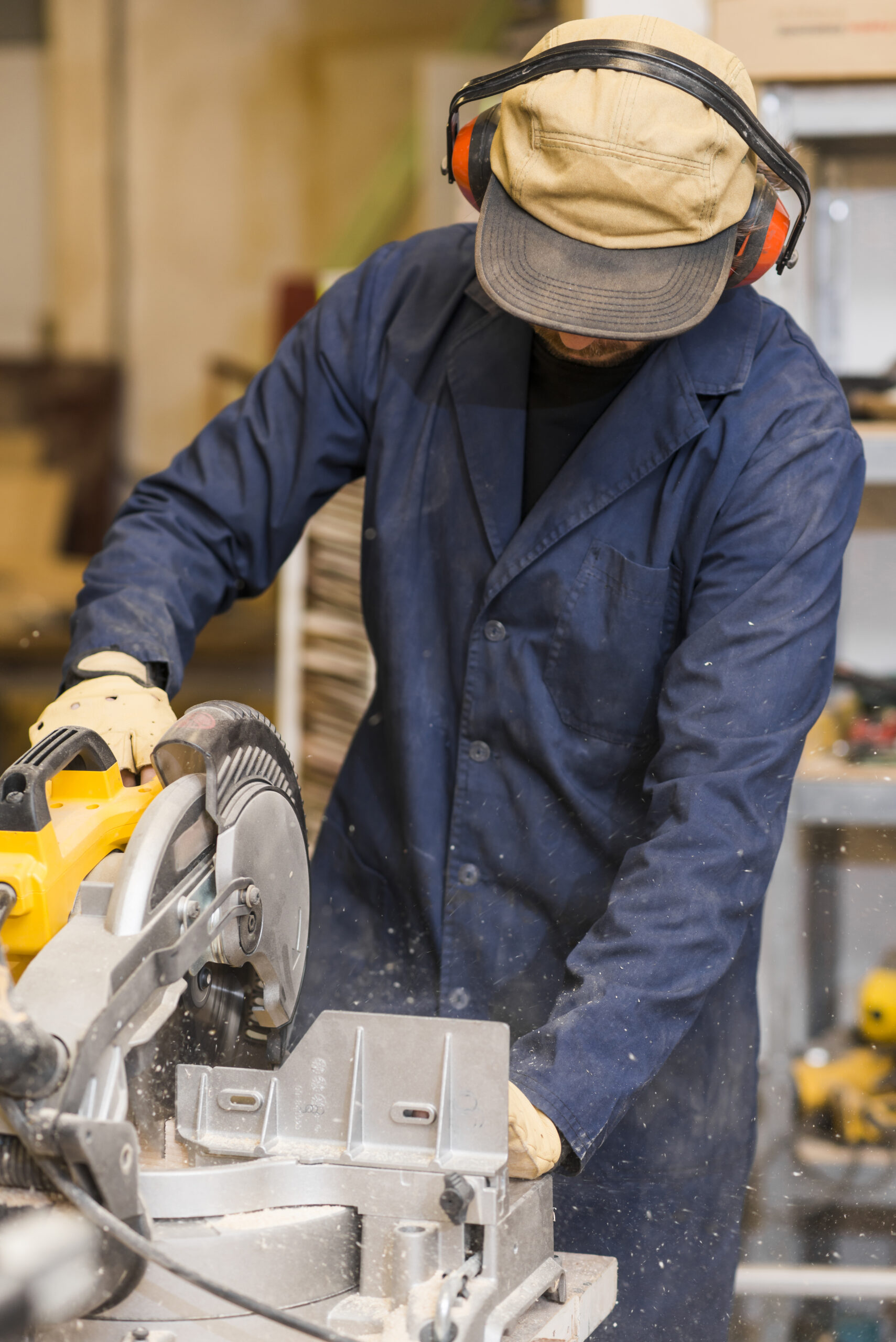
While machines are essential tools for facilitating and optimizing daily work, they also pose significant risks to worker safety. Their danger arises primarily from improper use or failure to comply with safety measures. In Senegal, workplace accidents related to machinery are a serious problem, the extent of which is confirmed by official statistics.
The world of work is characterized by the use of machines[1] that facilitate and optimize daily tasks. However, these tools, if not used adequately or if safety measures are not respected, can become sources of danger for workers. Workplace accidents related to machinery represent a worrying reality in Senegal, as evidenced by official statistics.
The annual report of labor statistics (2021), commissioned by the Directorate of Labor Statistics and Studies, reveals that there were 1320 declarations of occupational accidents (OA) and occupational diseases (OD).
Among the causes of these accidents are the use of power and hand-held machines (1.44% of OAs) and transmission machinery (1.06% of OAs).
Therefore, how can we prevent workplace accidents related to the use of machinery in Senegal?
To answer this question, we will address the following points: The legal framework for the prevention of workplace accidents related to machinery in Senegal, technical prevention measures, organizational prevention measures, as well as the role of the actors involved in prevention.
1. The legal framework for the prevention of workplace accidents related to machinery in Senegal
The Senegalese Labor Code has established a robust legal framework for the prevention of workplace accidents related to machinery. Articles L. 171, L. 174, and L. 175 define the employer's obligations and the measures to be implemented to guarantee worker safety.
Article L. 171 establishes the fundamental principle of the employer's responsibility regarding machinery safety. It stipulates that the employer must take all necessary measures so that the workplaces, machinery, equipment, substances, and work processes under their control do not present any risk to the health and safety of workers.
This responsibility translates into the obligation to employ prevention measures on three levels: technical measures and work organization measures.
Article L. 174 requires the employer to inform the Labor and Social Security Inspector of the use of processes, substances, machines, or equipment specified by regulations and likely to expose workers to occupational risks. This information allows the Labor Inspectorate to carry out inspections and ensure compliance with the prevention measures implemented by the employer.
Finally, Article L. 175 emphasizes the importance of regular monitoring of workplaces to guarantee the safety of machinery and installations.
On the European side, Regulation (EU) 2023/1230 on machinery replaces Directive 2006/42/EC to define the safety rules for machinery, related products, and partly completed machinery in the EU, thus ensuring a high level of safety for workers and citizens. It also aims to facilitate the free movement of these products within the single market. The regulation sets obligations for economic operators, essential health and safety requirements, and establishes conformity assessment procedures as well as guidelines for CE marking and declarations of conformity.
Thus, we can see that the sale and use of machinery are well regulated.
2. Technical prevention measures
Technical prevention measures aim to reduce or eliminate risks at the source, i.e., by acting on the machines themselves. They may include:
- The implementation of collective protections, such as safety barriers, protective covers, or interlocking systems;
- The use of machinery that complies with safety standards and is regularly maintained;
- The implementation of clear and visible safety signage.
3. Organizational prevention measures
Organizational prevention measures aim to reduce the risks associated with the use of machinery by acting on the organization of work and on worker behavior. They may include:
- Training workers in the use of machinery and safety instructions: a thorough knowledge of the machines and the risks associated with their use allows workers to adopt safe behaviors and minimize the risk of accidents. The training content may cover familiarization with the machines and their functionalities, identification of potential risks related to their use, learning safety instructions and work procedures, as well as mastering machine maintenance and upkeep techniques. It is also important to emphasize continuous training, which involves updating knowledge based on the evolution of machines and technologies, reinforcing acquired skills and maintaining vigilance, as well as adapting training to the specific needs of workers.
- The development of clear and precise work procedures: by defining the different steps to follow and specifying the safety instructions to be respected, these procedures help limit the risk of errors and accidents. They are written and easily accessible to workers, concise and understandable by all, and can be illustrated with diagrams or photos if necessary. Furthermore, they are regularly updated according to changes in machinery or processes. Work procedures serve as a reference for workers when performing tasks, allowing for better standardization of work practices, facilitating work supervision and control, and promoting a safety culture within the company.
- The implementation of regular monitoring of machinery and workplaces: regular monitoring of machinery and workplaces helps detect and correct anomalies that could cause accidents. This monitoring must concern the condition of the machinery, the presence of collective protections, the organization of workspaces, and compliance with safety instructions. Monitoring tools include regular visual inspections, periodic checks of machinery and installations, functional tests of collective protections, as well as an analysis of past incidents and accidents. The role of monitoring is to prevent machine breakdowns and failures, ensure compliance of workplaces with safety standards, identify areas for improvement and implement corrective actions, thus contributing to a prevention culture within the company.
4. The role of actors involved in prevention
The prevention of workplace accidents related to machinery involves the collaboration of several actors, notably:
- The General Inspectorate of Labor and Social Security, whose mission is to ensure the application of occupational safety and health regulations. In Senegal, the Labor and Social Security Inspector monitors the employer's compliance with hygiene and safety provisions through Article L. 170 of the Labor Code. When they observe a failure to comply with the standards or prescriptions thus established, the inspector formally notifies the employer to comply. Furthermore, when dangerous working conditions exist for the safety or health of workers, not covered by decrees issued pursuant to Article L. 168, the employer is formally notified by the Labor and Social Security Inspector to remedy them. The formal notice must be made in writing in the employer's register or by registered letter with acknowledgment of receipt. It is dated and signed. It specifies the nature of the failures or dangers observed and sets the deadline by which they must be resolved. This period cannot be less than 4 clear days except in an emergency indicated by the Labor and Social Security Inspector. Under the conditions and according to the procedures set by the Social Security Code, the employer is required to notify the Labor and Social Security Inspector of any occupational accident that has occurred or any occupational disease identified in the company. This notice is given without delay by any emergency means in the event of a fatal accident.
- The employer, who has the responsibility to implement the prevention measures required by the provisions of Articles L.170, L.171, L.172, L.173, L.174, and L.175 of the Labor Code.
- Workers, who are required to respect safety instructions and actively participate in prevention;
- Workers' representatives, who have the right to be consulted on occupational safety and health issues according to L. 185 of the Labor Code.
Ultimately, the prevention of workplace accidents related to machinery is a major issue for worker safety in Senegal. The provisions concerning this issue in the Senegalese Labor Code establish a robust legal framework. Their implementation, through effective preventive measures, helps employers ensure the safety of their employees and promote a healthy and secure work environment.